Reflections from the World Economic Forum in Davos
From the mountain top in Davos the discussion is dominated by the symptoms of a new political reality.
But the geopolitical rupture so clearly named is not an accident of history. It is not simply the result of stronger men, weakened institutions, or a sudden loss of restraint. It mirrors something more fundamental: the social soil of our societies. Politics is never autonomous. It grows out of lived experience – out of whether people feel secure, respected, and hopeful about a shared future.
For years, political volatility has been treated as external shocks; a series of crises to be managed. But increasingly, it looks like a reckoning with choices and policies made over decades.
Like for all political shifts, there is a supply and a demand side underlying the societal and geopolitical developments we are living through.
In the conversations about this new order, or dis-order, enormous attention is paid to the supply of new political paradigms, strong leaders and ideas: new doctrines, new blocs, new geopolitical arrangements and the reversal of liberal democracy and a rules-based international order.
Far less attention is paid to the demand that drives these political outcomes. Why are large shares of the population compelled to support these political ideas and leaders? Polling and data tell us that this is not driven by ideological shifts, but by the collapse of institutional trust, by citizens who no longer believe that existing systems work for them, or that liberal democracy still offers a credible path to a good life.
We have allowed inequalities to harden, social mobility to stall, trust to erode and all of that has led to fractures in our social cohesion. This is the soil in which this disruptive new political reality has grown over the last decades.
This is the demand side; the desperation for change that authoritarianism exploits. Not a sudden conversion to extreme ideas, but a slow loss of faith that democratic institutions can meaningfully improve everyday life. When trust erodes, people stop asking whether ideas are good, and start asking whether anyone is listening at all.
This is the deeper danger. When root causes are hidden by symptoms, democratic backsliding, polarization, and authoritarian temptations are treated as isolated pathologies, rather than as expressions of unmet social needs.
From the perspective of the Daniel Sachs Foundation, this is the central challenge of our time; renewing our institutions and the people who populate them to better answer the legitimate demands of citizens, not resorting to extreme politics.
Democratic renewal does not begin in constitutions or conferences. It begins with whether societies generate broad prosperity, real social mobility, and a genuine sense of a shared stake in society. Without this, democracy risks becoming a fragile ritual; repeated but no longer believed.
Democratic renewal is thus not abstract. It is about institutions that deliver. That invite participation rather than distance. That create pathways from voice to influence, from engagement to leadership and pathways to improved chances in life.
We need a serious commitment to confront structural problems without ideological shortcuts. Open societies must be both economically dynamic and socially cohesive; both globally engaged and domestically rooted; both principled and pragmatic (reflecting Finnish President Alexander Stubb’s argument for values-based realism).
This work cannot be outsourced to politics alone. Business shapes opportunity and needs to act as a trustee of an open, democratic, institutionally stable and socially cohesive society. Philanthropy can experiment and invest long-term where markets and states cannot. Civil society builds trust, voice, and agency. Politics must integrate these forces into a credible social contract.
For institutions to be relevant, representative and in service of citizens, we need to address the gap between people and politicians. Democracies do not renew themselves without new people and new methods of deliberation that ensure a broad sense of a stake in the system. Without this, institutions will continue to feel closed, distant, and self-referential.
What gives me cautious optimism in Davos this year is not consensus (there is very little of that…), but honesty and increasing realism. A growing recognition that nostalgia is not a strategy (as Canadian Prime Minister Mark Carney aptly put it): the tension around Greenland and the relationship between long-term allies, alongside the horrific ICE violence in the US, are making it blatantly clear that pretending the old order will simply return is a form of avoidance. It is also making it clear that legitimacy, once lost, cannot be restored through rhetoric alone.
The work ahead is slower, less theatrical, and more demanding. It requires rebuilding the foundations of open societies: education systems that open real paths to mobility, economic models that foster economic dynamism while ensuring wide-spread prosperity, institutions that treat citizens as participants, not problems; and leadership that tells the truth, even when it is uncomfortable.
This is long-term work by design. It is not about winning the next news cycle or launching the next grand framework. It is about restoring the conditions under which democratic life can breathe. About fixing the broken pipeline between movements and mandates, between civic energy and public authority. Replacing cynicism with agency, and protest with possibility.
At the Daniel Sachs Foundation, our work and focus remains exactly here – where social cohesion, political renewal, and responsible leadership meet. Because democracy becomes fragile when too many people feel it no longer belongs to them.
If there is one lesson this moment offers, it is that open societies are not self-sustaining. They must be cultivated; patiently, collectively, and with humility. The future will not be shaped only by power, but by whether we are willing to tend the soil from which our politics grow.
As important as it is not to externalize the political changes we are experiencing, to realize that we are all integrated in the soil where these ideas have been allowed to take root; as important to now focus on the agency we all have in building something better. We must replace complacency and the time and energy invested in worrying or creating scenarios for the future with investing in taking our own part in building a different reality.
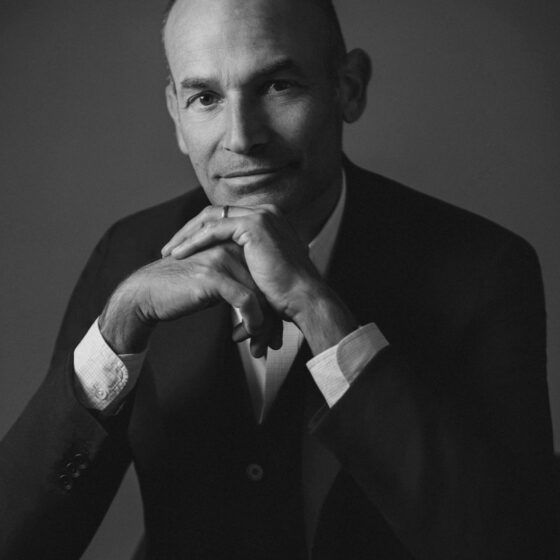
Daniel Sachs, Chair of the Daniel Sachs Foundation